
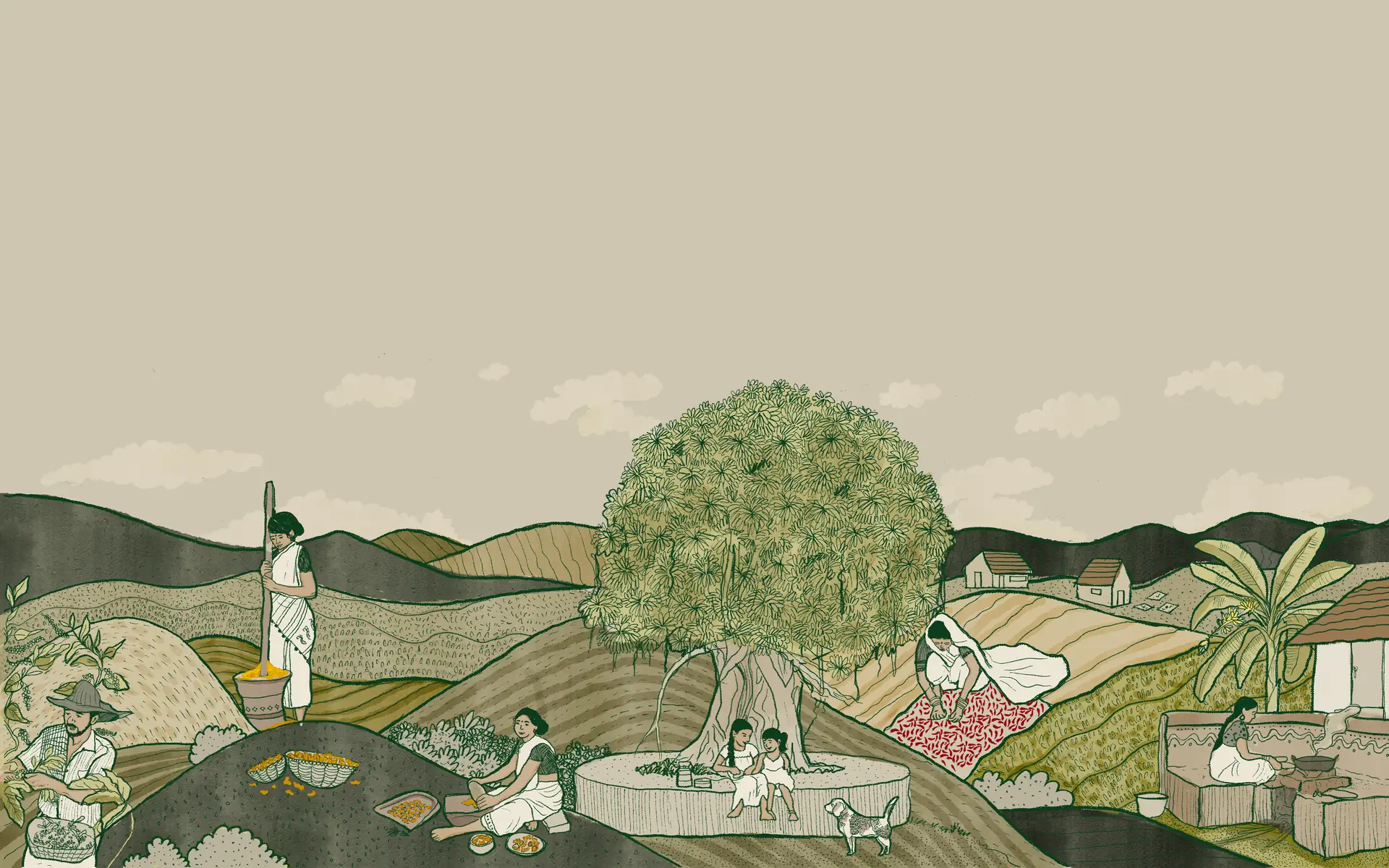
THE RECIPES WE REMEMBER.
THE FLAVORS WE RETURN TO.
Some dishes live in cookbooks. Others live in memory—the crackle of cumin in hot oil, the warmth of Chilies, the aroma that reaches the next room before the food does. Explore recipes rooted in Indian kitchens, made for the way we cook today.
Every Spice
Has a Role
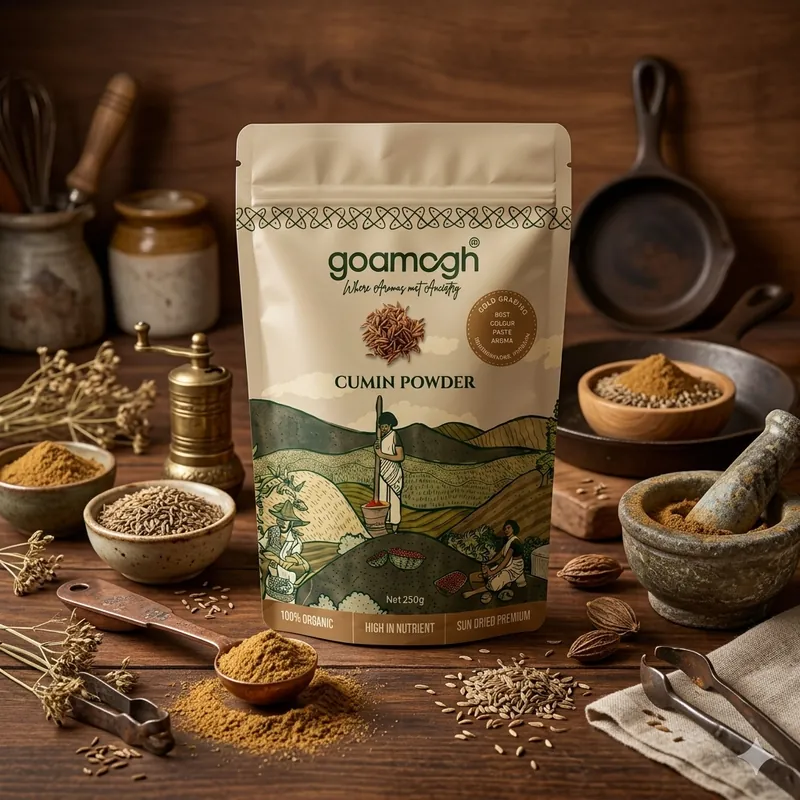
Cumin isn't just earthy—it is the first crackle in hot oil. Turmeric isn't just golden—it is warmth, color and depth. Chilli isn't simply heat—it brings fragrance and character to the entire dish.
THE ART OF BALANCE
Whole spices release their aroma in hot oil. Ground spices deepen the flavor as they cook. Add delicate spices later to preserve their fragrance.
FROM ORIGIN TO KITCHEN
Each spice carries a story of soil, climate and careful harvest. Thoughtful sourcing and small-batch processing help preserve its natural character.
A LITTLE SPICE KNOW-HOW
- •Cumin: earthy warmth and a nutty aroma
- •Turmeric: golden color and gentle depth
- •Coriander: citrusy freshness and balance
- •Chilli: vibrant color, aroma and heat
COOK WITH INTENTION
Bloom whole spices first, toast gently, and store powders in airtight containers away from heat, light and moisture.
When to Add the Spice
Changes Everything
Add cumin to hot oil and listen for the crackle. Bloom turmeric gently. Let coriander cook into the base. Bring chilli in at the right moment.
Learn Your Spices.
Cook With Confidence.
- How to Use Turmeric in Everyday Cooking
- How to Cook With Cumin
- Cumin vs Coriander: What's the Difference?
- How to Store Indian Spices
Recipes Worth
Coming Back To
We believe the best recipes are not complicated. They are the ones you make once, remember forever, and eventually stop needing the recipe for.
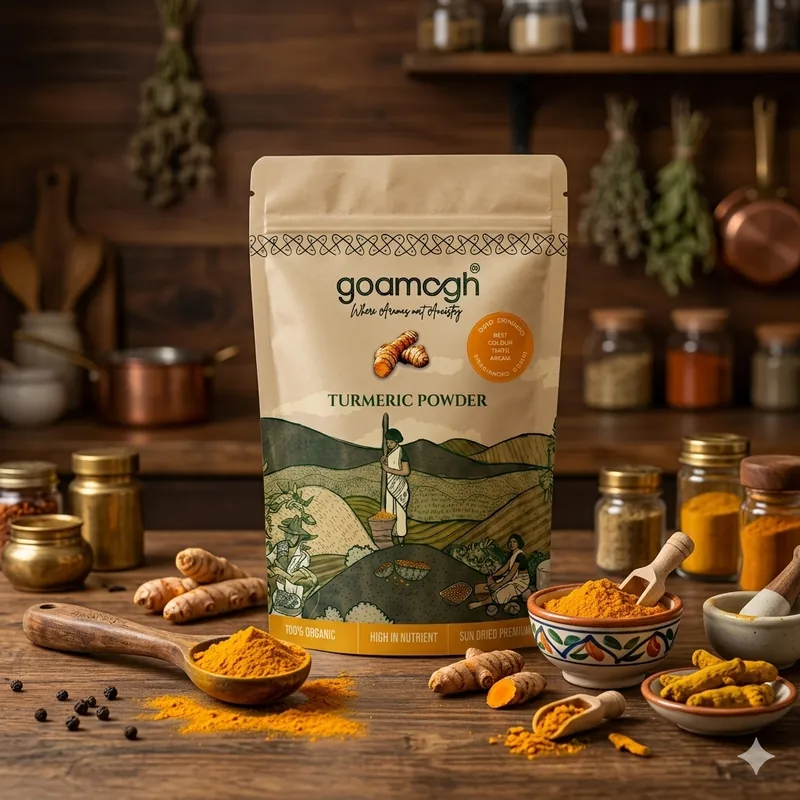
Goamogh Turmeric Milk
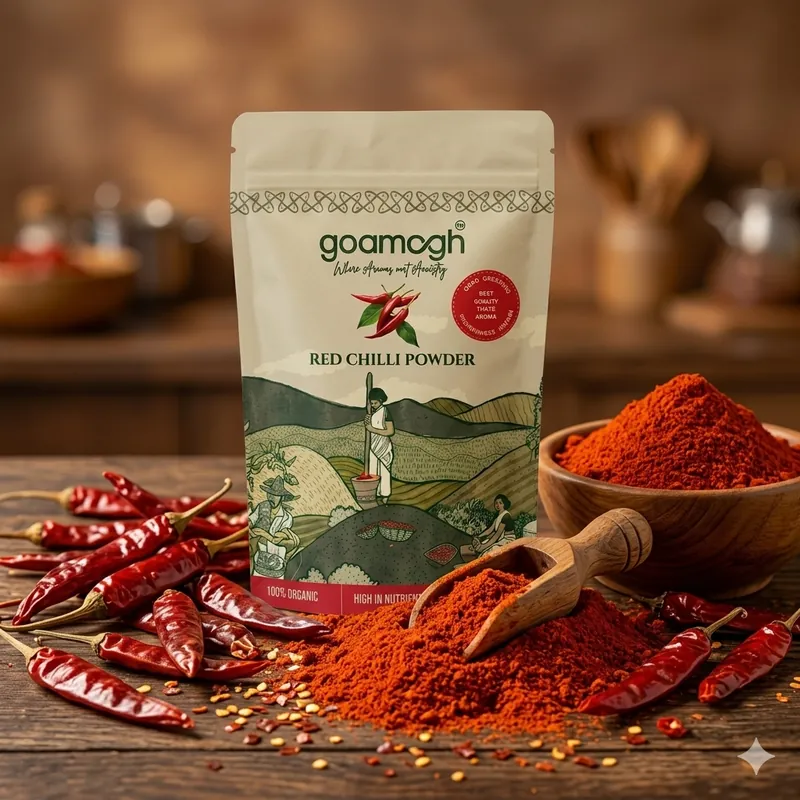
Spiced Red Chilli Curry
Golden Black Pepper Tonic
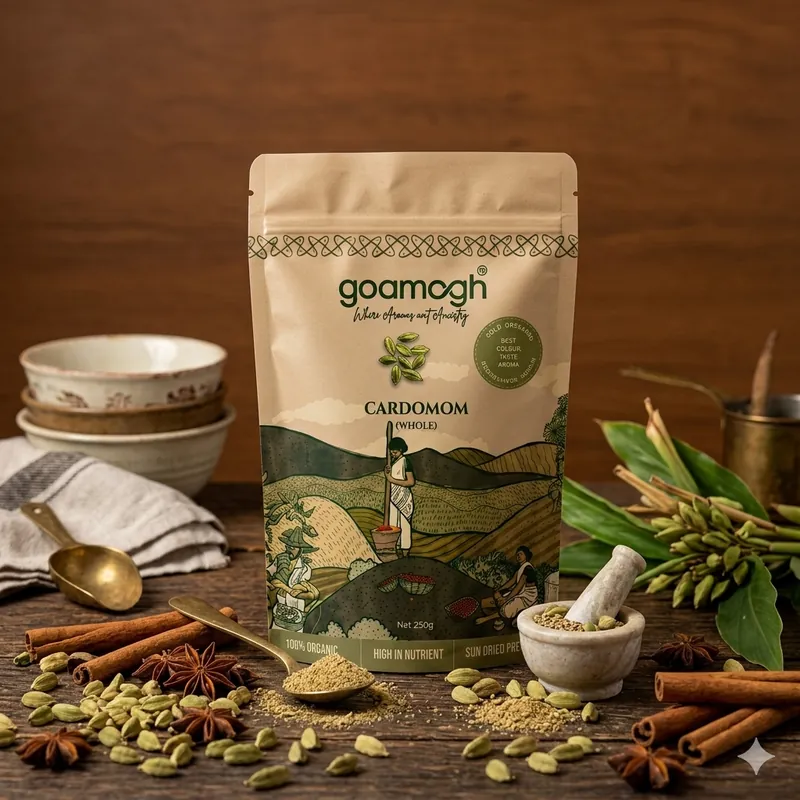
Cinnamon Clove Metabolic Chai
Jeera Pepper Digestive Water
Kashmiri Dum Aloo
Punjabi Black Pepper Chicken
Chettinad Pepper Chicken